
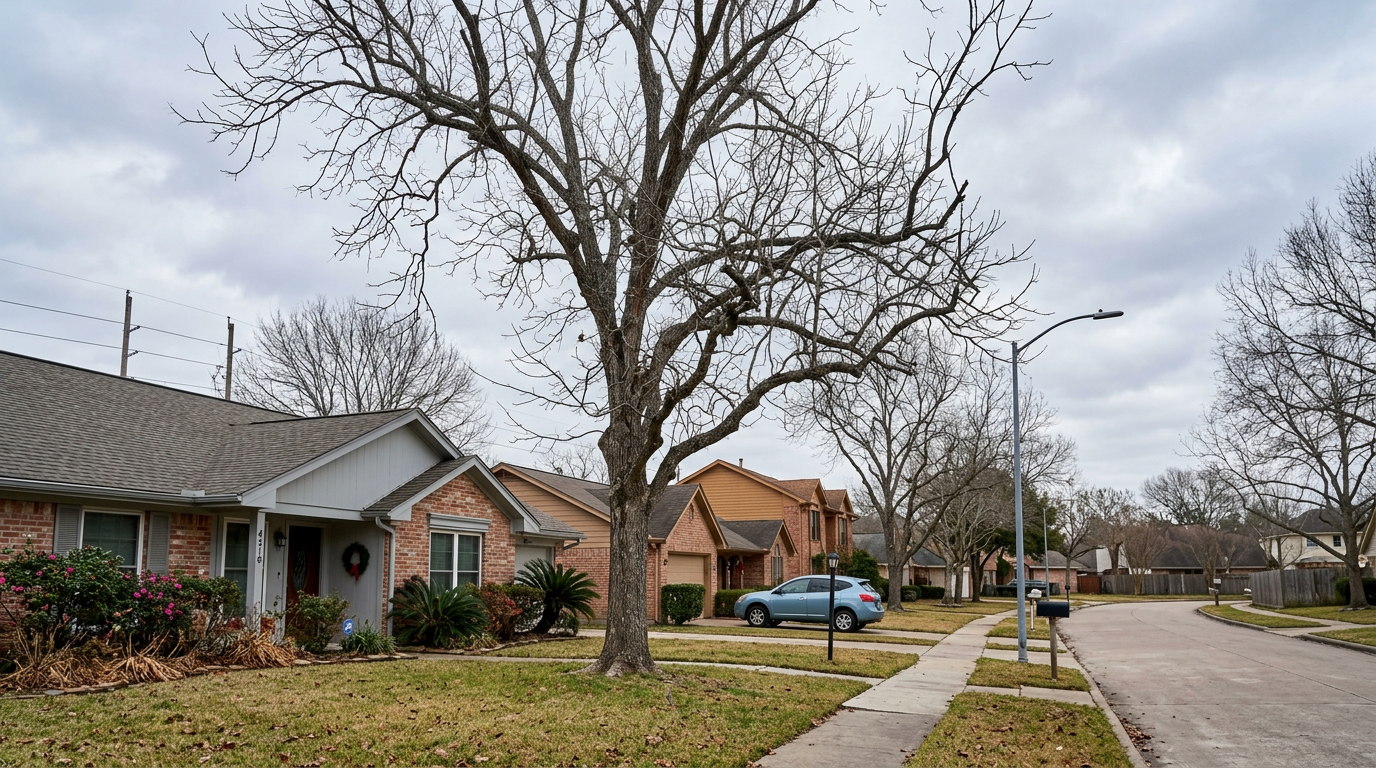
When is the best time to trim trees in Houston?
While tree trimming can be performed throughout the year when necessary, winter tree trimming offers several advantages for maintaining healthy, structurally sound trees in Houston.
As temperatures cool and many trees begin slowing their growth, homeowners have an opportunity to address structural concerns, remove problematic branches, and prepare their trees for the growing season ahead.
However, not every tree benefits from being trimmed at the same time. Understanding how seasonal changes affect different tree species is an important part of making good pruning decisions.
1. Dormant Trees Make Structural Problems Easier to See
One of the biggest advantages of winter tree trimming is improved visibility.
When deciduous trees lose their leaves, their branch structure becomes much easier to evaluate. Without dense foliage obscuring the canopy, an experienced tree professional can better identify:
- Crossing or rubbing branches
- Weak branch attachments and competing leaders
- Dead, damaged, or broken limbs
- Excessive weight at the ends of branches
- Areas of crowded or unbalanced growth
These structural characteristics can be difficult to identify when a tree is covered in leaves.
Winter pruning provides an opportunity to evaluate the tree’s overall structure and make selective cuts that support its long-term development.
One of the greatest benefits of winter tree trimming is the opportunity to identify structural concerns before spring growth makes them harder to see.
2. Winter Pruning Can Support Healthy Spring Growth
Many deciduous trees enter a period of dormancy during the cooler months. During this time, growth slows and the tree’s energy demands change.
Pruning during dormancy can be beneficial because the tree is not actively producing large amounts of new foliage.
When spring arrives, the tree can direct resources toward its remaining branches and new growth.
However, proper pruning is about more than encouraging growth. Removing the right branches can improve structural development, reduce competition between limbs, and help establish a stronger framework as the tree matures.
The goal isn’t simply to remove branches. It’s to make cuts that benefit the tree for years to come.

3. Cooler Weather Can Reduce Certain Disease and Pest Risks
Another potential advantage of winter tree trimming is reduced activity from certain insects and disease organisms.
Some tree pests and pathogens are more active during warmer weather. Pruning during an appropriate dormant period may help reduce exposure to these threats.
This is particularly important for certain oak species, where pruning timing can influence the risk of oak wilt.
In Texas, oak wilt is a serious concern. The Texas A&M Forest Service generally recommends avoiding unnecessary oak pruning from February through June, when conditions can favor disease transmission.
For this reason, late fall and early winter can be useful times to evaluate oak trees and complete necessary pruning before the higher-risk season begins.
Even during cooler months, proper pruning techniques and attention to tree health remain essential.
4. Address Weak Branches Before Severe Weather
Houston homeowners are familiar with the damage strong winds and severe storms can cause.
Although hurricane season ends in November, winter cold fronts and spring thunderstorms can still bring damaging winds to Southeast Texas.
Fall and winter tree trimming provide an opportunity to identify and address structural weaknesses before the next period of severe weather.
Potential concerns include:
- Dead or partially broken branches
- Weak unions between large limbs
- Branches extending over roofs or other structures
- Limbs with excessive end weight
- Previous storm damage that was never properly addressed
Selective pruning may reduce the likelihood of certain branches failing during a storm. Winter tree trimming gives homeowners an opportunity to address these concerns before severe spring storms arrive.
However, trimming cannot eliminate the risk of tree failure. Root conditions, soil stability, internal decay, and the overall structure of the tree all contribute to its ability to withstand severe weather.
A healthy-looking canopy doesn’t always tell the entire story.
5. Young Trees Benefit From Early Structural Pruning
Winter is also an excellent time to evaluate the development of young deciduous trees.
Many structural problems seen in mature trees begin when the tree is young.
Multiple competing leaders, poorly positioned branches, and weak branch attachments can become increasingly difficult to correct as the tree grows.
Early structural pruning can help establish:
- A strong central leader where appropriate for the species
- Better spacing between permanent branches
- Stronger branch attachments
- A balanced canopy
- Fewer structural problems as the tree matures
Young trees generally require smaller, more selective cuts than mature trees.
By addressing potential problems early, homeowners can often avoid the need for more extensive corrective pruning later in the tree’s life.
6. Not Every Tree Should Be Trimmed in Winter
While winter tree trimming offers many benefits, the best approach depends on the species, age, health, and structure of each tree.
Houston’s diverse tree population means that pruning decisions should consider more than just the season. Some trees benefit from structural pruning, while others may need selective branch removal or attention to specific areas of concern.
An experienced tree professional can evaluate these factors and recommend the most appropriate approach to maintaining your trees.
Is Fall or Winter Better for Tree Trimming in Houston?
For many deciduous trees, late winter is an excellent time for structural pruning before spring growth begins.
However, late fall and early winter can also be appropriate, particularly when addressing structural concerns or planning pruning around disease prevention.
In Houston, where winter temperatures fluctuate and many tree species remain green throughout the year, there is no single ideal pruning date for every tree.
The most important factor is understanding what the tree needs and choosing the right time to accomplish it.

Good Tree Trimming Is About Long-Term Tree Health
Tree trimming should never be about removing as much growth as possible.
Every cut changes how a tree grows, distributes weight, and responds to its environment. Poor pruning can create structural problems that take years to correct, while thoughtful pruning can help a tree develop a stronger, healthier structure over time.
Fall and winter provide an opportunity to look beyond the leaves and evaluate the framework supporting the entire tree.
The best tree care decisions aren’t always the most noticeable ones. They’re the ones that continue benefiting the tree long after the work is finished.
Professional Tree Trimming in Houston
Considering winter tree trimming in Houston? Whether you’re concerned about overgrown branches, preparing for seasonal storms, or simply maintaining the health of your trees, cooler weather is a good time to evaluate your property’s tree care needs.
Our team takes a thoughtful approach to tree trimming, considering the species, structure, and long-term health of each tree before making cuts.
Contact us to discuss tree trimming and seasonal tree maintenance in the Houston area.
Frequently Asked Questions
What is the best month to trim trees in Houston?
For many deciduous trees, December through February can be a suitable pruning window. However, the ideal timing depends on the species, weather, and tree health. Oak wilt precautions and flowering cycles may affect the recommended schedule.
Is it okay to trim trees in November?
Yes. November can be an appropriate time to trim certain trees in Houston, particularly when removing dead or damaged branches or addressing structural concerns. Some trees may benefit from waiting until deeper winter dormancy.
Does winter tree trimming help prevent storm damage?
Proper pruning can reduce certain structural risks, such as weak or damaged branches. However, it cannot prevent all storm damage, especially when tree failure involves roots, soil conditions, or internal decay.
Should live oak trees be trimmed in winter?
Winter is often a preferred time for necessary live oak pruning in Texas because of oak wilt concerns. Texas A&M Forest Service recommends avoiding unnecessary oak pruning from February through June. Appropriate wound treatment and current local disease-prevention guidance should also be followed.
Can trimming a tree in winter damage it?
Improper pruning can damage a tree during any season. Excessive branch removal, poor cut placement, and pruning at an unsuitable time for the species can negatively affect tree health. Proper technique and timing are both important.